


UP TO 50% OFF + Free Gift at £200+
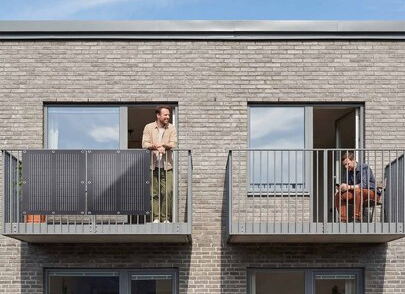
Are you considering balcony solar panels and want to know exactly what to expect? A 2×110 watt solar panel set (220 W) is specifically designed for flats and smaller households. These solar panels for balconies provide an accessible way to generate your own electricity without installing solar panels on the roof.
Below we answer the most important questions about savings, performance, installation and safety of balcony solar panels – clearly explained and without unnecessary details.
Annual savings from balcony solar panels depend on your sun exposure, possible shade, electricity price and how much electricity you use directly during the day. With a favourable orientation (south, south-east or south-west), many households save on average around £60 per year.
This roughly equals about 150 washing cycles per year or regularly charging an electric bicycle.
Even more important is that the electricity produced by your balcony solar system is used directly in your home. Appliances such as your fridge, modem and other standby devices run partly on your own solar energy during the day. As a result, you draw less electricity from the grid and immediately see the effect on your energy bill.
For flat owners or tenants without a suitable roof, balcony solar panels offer an accessible way to generate renewable electricity. A 220 W balcony solar kit is compact, affordable and well suited to the electricity consumption of a smaller household.
Because the electricity generated by the balcony solar panels is used directly in your home, the efficiency is often surprisingly high.
The average payback period for balcony solar panels is between three and six years, depending on purchase price, orientation and electricity tariffs. If electricity prices rise, the payback period automatically becomes shorter.
Yes. Solar panels for balconies produce electricity whenever there is daylight. In winter the production is lower because the sun is less powerful and shines for fewer hours, but the system remains active throughout the year.
Even on cloudy days, balcony solar panels generate electricity, although in smaller quantities. Your installation is therefore never completely “off” as long as there is daylight.
In most cases, yes. The balcony solar panels are compact (around 81 × 81 cm per panel) and lightweight. They are usually mounted on the balcony railing and designed for standard apartment balconies.
The highest energy yield is achieved when the balcony solar panels face south, south-east or south-west. East and west orientations also work, but usually produce slightly lower annual output.
Shade affects the efficiency of balcony solar panels, especially when it is present for longer periods due to upper balconies, trees or nearby buildings. The more direct sunlight the panels receive, the higher the energy yield.
A 220 W balcony solar panel system is designed as a plug-and-play solar system. The panels are connected to a micro-inverter, which is then plugged into a grounded electrical socket.
In practice this means: mount the panels, connect the inverter and plug the system into the socket.
Installation on a suitable balcony usually takes between ten and thirty minutes. It is important that the socket is located within three metres of the inverter, as extension cables are discouraged due to potential power loss and safety risks.
Although many people install balcony solar panels themselves, the instructions recommend that installation be carried out by a qualified person. If you are unsure about your electrical connection, professional advice is recommended.
Yes. The balcony solar system can be connected to the Calex app via Wi-Fi. This allows you to see real-time production, daily energy yield, historical data and total electricity generation.
With the app you can easily monitor how much electricity your balcony solar panels produce and how much energy you use directly in your home.
When installed correctly, balcony solar panels are safe to use. The system must always be connected to a grounded electrical socket.
Keep in mind that solar panels produce electricity as soon as they receive daylight. Always ensure that all cables and connections are properly installed before plugging the system into the socket.
You should also check whether permission is required from your building management company or landlord. In many buildings installing solar panels on a balcony is allowed, but it is wise to verify this in advance.
The electricity generated by the balcony solar panels is used directly in your home. Household appliances automatically use your solar energy first.
As a result, your electricity meter runs more slowly and you purchase less electricity from your energy supplier.
Each micro-inverter can connect a maximum of two solar panels. If you want to expand your balcony solar system, an additional inverter is required.
Although the panels are flexible in installation options, they must not be bent during installation to prevent damage.
With a 220 W balcony solar panel system, you choose an accessible and efficient way to generate your own electricity without installing solar panels on the roof. These balcony solar panels are compact, suitable for apartments and usually pay for themselves within three to six years.
For anyone who wants to reduce energy costs and start using solar energy, balcony solar panels are a practical first step toward generating your own electricity.


