


UP TO 50% OFF + Free Gift at £200+
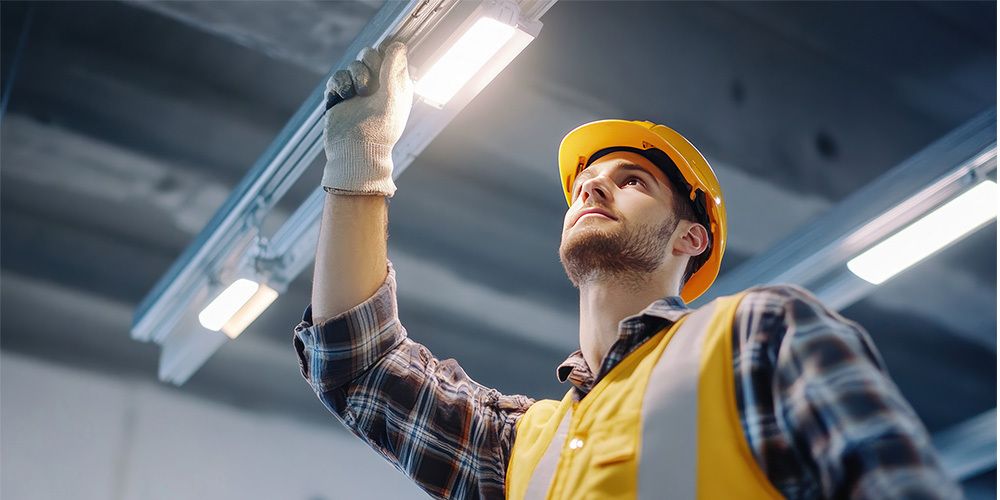
When you’ve recently purchased an LED fixture, LED tube fixture or LED batten, you naturally want to get the most out of your new lighting. Many professional LED solutions are linkable, allowing you to create longer light lines in warehouses, production halls or offices. But how do you know whether your LED fixture can be linked, and what should you pay attention to?
An LED fixture is linkable when the manufacturer clearly states this in the product specifications. This is often mentioned under terms such as “through-wiring”, “linkable”, “incl. connector” or “daisy-chainable”. For LED tube fixtures or LED battens, you usually recognise this by:
● Through-wiring connectors (3-, 4- or 5-pole) on both sides
● Supplied coupling pieces for mechanically connecting multiple fixtures
● Connection points in the housing for feed-through wiring
● Mention of maximum load per light line, such as “max. 10 fixtures per line”
When in doubt, always check the manual.
Linking LED fixtures typically follows a straightforward step-by-step method:
Switch off the power to work safely.
Install the first LED fixture and connect it to the main power supply.
Use the through-wiring connector to power the next fixture.
Mechanically attach the LED batten or LED tube fixture to the previous fixture or support rail.
Repeat this process until your continuous light line is complete.
Many modern LED tube lights work with quick-connectors, allowing installers to mount them 30–40% faster.
Pay attention to the following when linking LED fixtures:
● Maximum load of the through-wiring (to avoid voltage drop).
● Heat dissipation: ensure enough clearance around the fixtures.
● Compatibility: make sure all fixtures are from the same series.
● Mechanical stability: especially important for light lines longer than 10 metres.
An LED fixture, LED tube fixture or LED batten is easy to link as long as it features through-wiring and matching connectors. By daisy-chaining safely and monitoring load, heat and mechanical installation, you create an efficient, reliable light line. This way, you get maximum efficiency from your LED installation.


