


UP TO 50% OFF + Free Gift at £200+
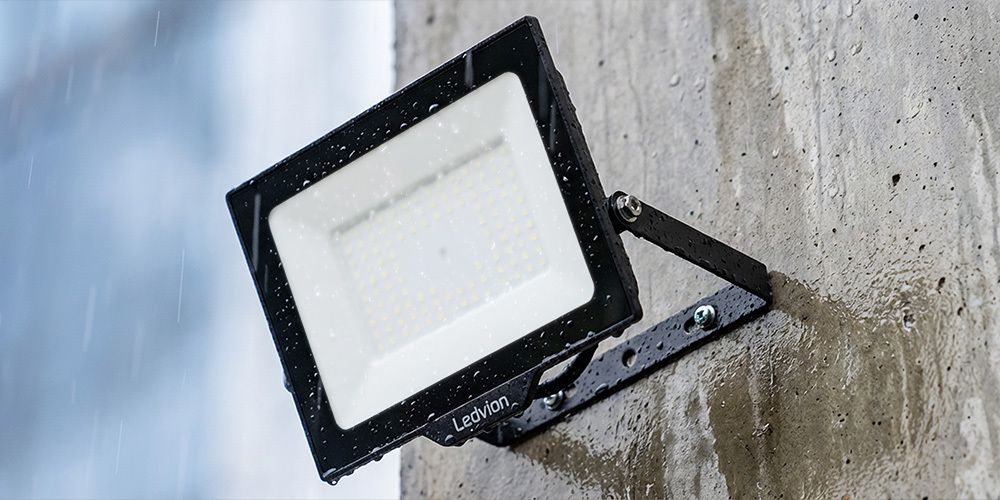
An LED floodlight is an efficient and sustainable solution for illuminating company grounds, loading docks, warehouse façades and parking areas. Thanks to its low energy consumption, you can save up to 50% in energy, especially when using a floodlight with a sensor. A correct installation is crucial for safety, lifespan and proper waterproof sealing. Below you’ll find a step-by-step guide.
For outdoor applications, an LED floodlight with at least IP65 is required. This prevents damage caused by rain, dust and cleaning. Make sure you have: a waterproof junction box, cable gland, 3-core cable, stainless steel mounting hardware and heat-shrink tubing. Always ensure the circuit is de-energised before starting.
Install the floodlight on a vibration-free wall, pole or steel structure. Use stainless steel screws and position the fixture at a 20–35° angle for optimal light distribution without glare. This also applies to floodlights with sensors, where the correct angle improves detection.
Turn off the circuit and check with a voltage tester to make sure no voltage is present.
Strip 6–8 mm of insulation from the cores and apply heat-shrink tubing for added protection.
Insert the cable through the waterproof cable gland into the junction box. This is essential for maintaining waterproof sealing.
Use the standard colour coding:
● Brown = L
● Blue = N
● Yellow/Green = PE
Ensure the cores are firmly secured in screw or push-in connectors.
Always route the cable downward. This prevents water from running into the fixture or junction box.
Tighten the cable gland, close the junction box lid and apply heat-shrink tubing at critical points.
Restore power and test the LED floodlight. For floodlights with sensors, adjust the lux level, detection range and hold-time.


