


UP TO 50% OFF + Free Gift at £200+
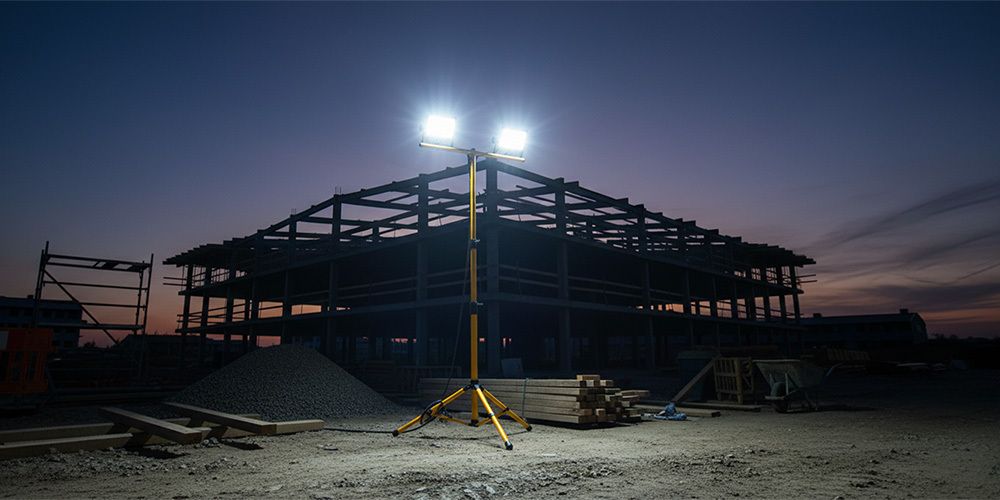
When choosing an LED floodlight for a site, façade or garden, many people first look at wattage. Understandable — for years, wattage was the way to compare the light output of traditional lighting. But with modern LED technology, things work differently. If you want to save real energy and choose the correct brightness, you need to look beyond wattage alone.
For outdoor lighting such as area illumination or façade lighting, everything revolves around the right brightness. Too little light creates unsafe situations, while too much light wastes unnecessary energy. That’s why it’s important to match the light output (lumens), beam distribution and colour temperature to the application.
Many businesses still choose lighting based on wattage, but with LED this is no longer reliable. Wattage only indicates how much energy a lamp consumes — not how much light it produces. Two 50W LED floodlights can differ by up to 40% in light output.
That’s why modern lighting selection is based on lumens: the true measure of light quantity.
Wattage represents the power consumption of the lamp. With halogen and discharge lamps you could use wattage to compare brightness, but with LED every manufacturer works with different efficiencies.
An example:
● An old 500W halogen lamp ≈ 8,000 lumens
● A modern 50W LED floodlight ≈ also 8,000 lumens
This gives you an instant energy saving of up to 90% — but only if you look at lumens, not watts.
Besides lumens, several other factors influence light quality:
● Colour temperature (4000K or 6500K) for the right application and safety
● CRI value for natural colour rendering
● Beam angle for optimal spread
● Sensors for extra energy savings (e.g. a floodlight with sensor)
These elements together determine how effectively a LED floodlight actually performs.
A good LED floodlight is not chosen based on wattage, but on lumens and light quality. By paying attention to brightness, colour temperature and sensor technology, you can save up to 50% extra energy while improving safety around your building. That’s how you make a sustainable, future-proof choice for your site or façade lighting.


